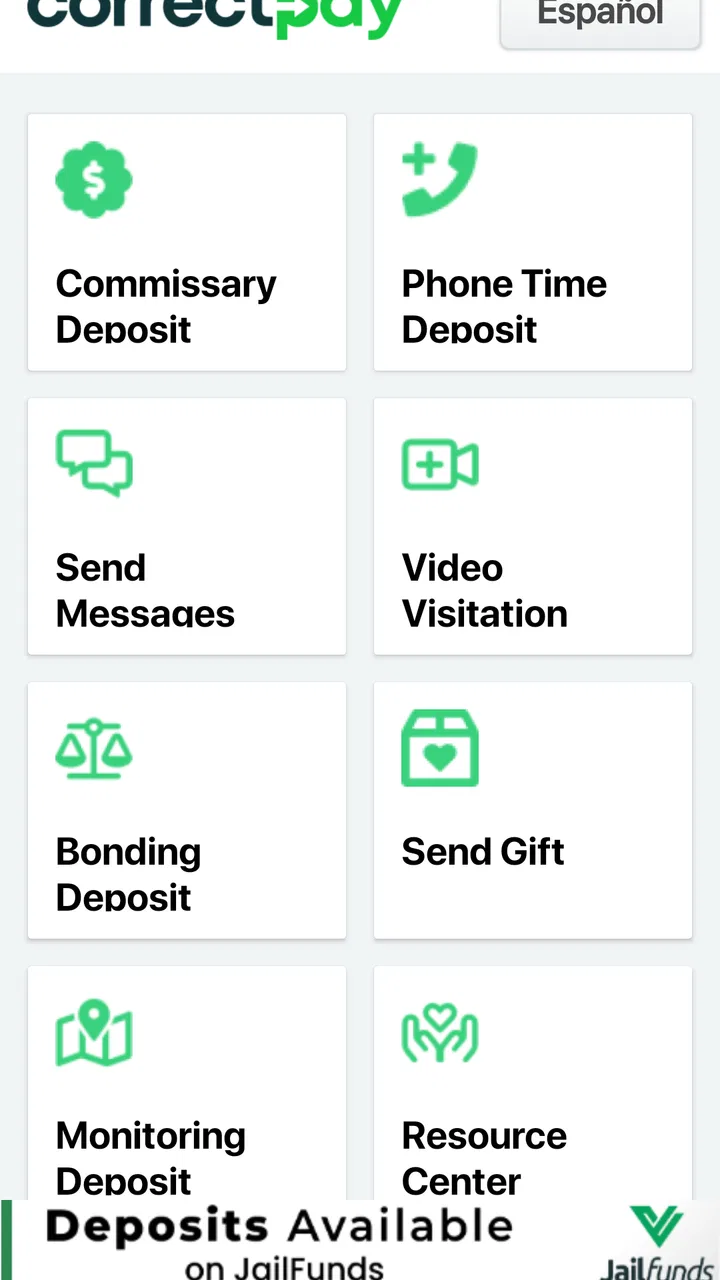
CorrectPay
- 3.6
- Rating
- 500.00K
- Installs
- Free
- Price

 Analysis by App-foxy
Staying connected with someone in jail is rarely as simple as sending a quick message. Calls, visits, and account deposits often follow a separate routine from ordinary communication, and that routine can be difficult to manage when you are already balancing work, family, and travel. CorrectPay is built for that particular gap. It is a free communication app from Tyler Technologies, Inc that brings commissary deposits and video visits into one mobile experience. After using it, I found that its biggest effect is not making communication feel casual; it makes the process more organized and deliberate.
That distinction matters. This is not a general-purpose messenger, a social network, or a replacement for everyday chat apps. Its purpose is narrower and more practical: helping people support loved ones in jail and arrange contact through the services connected to the facility. If that is your situation, having one place to begin those tasks can reduce some of the searching and uncertainty. If you are looking for spontaneous messaging with friends or family, this is the wrong kind of app.
How CorrectPay fits into a difficult communication routine
The app belongs to the communication category, but its communication model is more structured than what most people expect from that label. I do not open it to browse a feed or wait for a notification-heavy conversation. I open it with a specific purpose: make a deposit or take part in a video visit. That changes the rhythm immediately. Instead of encouraging constant attention, the app supports planned moments of contact.
You May Also Like

 Blood Strike: 2.5 Anniversary
Blood Strike’s Loadouts Turn Every Drop Into a Tactical Gamble
A close look at Blood Strike’s custom loadouts: how fast access to signature weapons reshapes its battle royale rhythm, rewards preparation, and narrows the gap between fights.

 Pandora - Music & Podcasts
Pandora’s Music Is Easy to Start, but Harder to Recover
Pandora’s strength is its low-effort path from a seed to a station. Its weak spot is how much confidence it asks you to place in connection, setup, and quiet recovery.

 8 Ball Pool
 Is Built on Rivalries, Rematches, and Routine
A close look at the rivalries, rematches, shared routines, and unanswered safety questions that turn a quick pool match into a persistent mobile community.

 Samsung Music
’s Quiet Strength Is Playing What You Already Own
Its reach comes less from spectacle than from dependable access to a personal library. That simplicity is both the app’s strongest retention engine and its ceiling.

 AccuWeather: Weather Radar
AccuWeather Review: A Quick, Clear Forecast for Everyday Decisions
For everyday plans, the best forecast is the one you can understand quickly. AccuWeather makes rain timing, radar, and local conditions easy to act on, with a few trade-offs.

 Hill Climb Racing
Why Hill Climb Racing Still Turns Crashes Into One More Run
A tiny car, a bumpy hill and one more upgrade: Hill Climb Racing keeps resurfacing because its simple chaos makes every near-miss feel personal.
More From Our News Desk



That can be a real benefit for families. A person who is trying to stay involved may otherwise need to remember separate websites, payment steps, visit arrangements, and facility details. CorrectPay gives those activities a common starting point. The value is less about entertainment and more about reducing the number of places I have to check before I can act.
The app was released on March 8, 2021, and it is available at no cost. It is rated for Everyone, which makes the basic app approachable for a broad household audience. The public listing shows a 3.5 average from around 1.2 thousand ratings, with more than 100 thousand installs. I read that combination as a sign of a useful but not universally smooth experience: enough people rely on it for the purpose, while the middle-of-the-road rating suggests that individual facility processes and user expectations can strongly affect satisfaction.
That context is important before downloading. CorrectPay is not able to make a jail communication system feel identical to ordinary phone or video-call services. The facility remains part of the experience, and that means the app is best understood as a bridge to an existing process rather than an independent communication platform.
The first decision is whether your facility belongs in the workflow
My first practical recommendation is to identify the relevant jail and the exact type of contact you need before spending time setting everything up. The app’s purpose is tied to commissary deposits and video visits, so the useful path depends on the institution and the service it supports. A person who downloads it without knowing which facility information they need may feel that the app is confusing when the real issue is that the communication route has not yet been defined.
This is one of the less obvious trade-offs. A general messaging app usually starts with a contact name, phone number, or username. CorrectPay starts with an institutional relationship. That can feel slower, but it also reflects the reality of communicating with someone in custody. I found it more helpful to treat the app like a service desk for a scheduled task rather than like a conversation window.
For a family member who makes occasional deposits and joins planned visits, that distinction creates a clearer routine. I can decide what needs to happen, gather the necessary details, and use the app during a focused session. Someone expecting an always-open inbox will probably find the experience limited, even if the app performs its intended role.
Deposits and video visits create two different kinds of contact
CorrectPay combines financial support and visual communication, but those actions should not be mentally treated as one continuous conversation. A commissary deposit is a practical act of support. A video visit is a time-based interaction that requires attention and emotional energy. Keeping those purposes separate helps prevent a common mistake: opening the app to handle one task and drifting into a rushed or poorly planned visit.
I would use the deposit workflow when I have enough time to review the recipient and the amount carefully. Even without turning the process into a large project, a short pause before confirming is worthwhile. The most useful habit is to avoid making a deposit while distracted by other errands or conversations. The app centralizes the action, but the responsibility for checking the details still belongs to the person using it.
For video visits, I would prepare earlier than I would for an ordinary video call. The point is not just to press a button and start talking. A visit has a beginning and an end, and the emotional shift into that conversation can be significant. I found that setting aside a quiet period makes the contact feel more respectful and less like another item squeezed between notifications.
This separation also answers a question many new users have: is the app mainly for money or mainly for visits? It is designed for both, but the two functions serve different needs. If you only need to make a commissary deposit, you may use only that part. If your main goal is a video visit, the deposit tools do not automatically make the visit experience more convenient. The benefit comes from having both relevant services associated with the same app, not from blending them into one type of communication.
What the conversation flow feels like in real life
Imagine a weekday evening when a family member wants to support someone in jail and also prepare for an upcoming video visit. In a normal messaging app, the family might exchange quick reminders throughout the day. With CorrectPay, the rhythm is more intentional. The user opens the app to complete the deposit, then returns when it is time to focus on the visit. That creates fewer casual touchpoints, but it can make each planned interaction easier to recognize.
I see this as both a strength and a limitation. The strength is clarity. I am less likely to confuse a financial task with a personal conversation, and I can give the visit my full attention. The limitation is that the app does not turn an institutional process into an informal chat. If someone needs frequent back-and-forth communication, CorrectPay will feel quiet between scheduled actions because that is not what it is built to provide.
The best workflow I found was to group related preparation together without rushing the actual contact. I would confirm which person and facility I was dealing with, handle the deposit as its own step, and then think separately about when I could give the video visit enough time. This small change prevents the app from becoming a source of mental clutter. It also makes it easier to notice whether I am using it for practical support or trying to force it into the role of a messenger.
Another useful habit is to keep personal expectations realistic. A video visit through a correctional setting may not carry the same spontaneity as a call through a familiar consumer app. CorrectPay can provide the route to the visit, but it does not erase the scheduling and institutional context around it. That is why I judge the app by how clearly it helps me reach the intended task, rather than by whether it feels like a mainstream video-chat service.
Attention is the hidden cost of staying connected
Communication apps often compete for attention, but CorrectPay presents a different problem: the user may already be emotionally invested before opening it. A deposit can represent concern, responsibility, or urgency. A video visit can require concentration and privacy. In that setting, convenience is not only about fewer taps. It is also about reducing the number of decisions I have to make while I am already carrying emotional pressure.
The focused nature of the app helps here. I do not experience it as a place that demands constant checking. That makes it easier to create a boundary around use: open it when there is a clear reason, complete the relevant task, and leave. For people who are trying to stay supportive without allowing every part of the day to revolve around custody-related logistics, that rhythm can be healthier than a platform designed around continuous engagement.
At the same time, the process can still become mentally expensive if I treat every visit or deposit as something that must happen immediately. My practical advice is to create a small personal routine around it. Decide when you normally review support needs, keep the necessary information accessible, and avoid starting a video visit while multitasking. These are not flashy features, but they make a noticeable difference in whether the app feels manageable.
The emotional side is especially important for first-time users. Someone may expect the app to solve the uncertainty of staying in contact, but an app cannot remove all uncertainty from an institutional communication system. It can provide a more consistent place to begin. I found that the experience worked best when I used it to create structure rather than expecting it to provide reassurance on its own.
Boundaries, privacy, and the right level of involvement
CorrectPay also changes how I think about boundaries. Because the app is connected to support and visits, it can be tempting to open it whenever I feel worried. That may lead to repeated checking without a clear task. A better approach is to decide what kind of help I am offering and how often I can realistically provide it. The app supports that decision, but it should not make the decision for me.
For households sharing responsibilities, a simple division of tasks can prevent confusion. One person might handle deposits while another organizes visits, or the family might agree on who confirms details before anything is submitted. The app’s combined purpose makes this kind of arrangement easier to discuss, but it also means users should be clear about who is doing what. Without that clarity, two people could assume the other handled an important step.
I would also avoid using a rushed visit as a substitute for a meaningful one. If the room is noisy, the internet connection is unreliable, or I have only a few distracted minutes, the contact may leave everyone feeling more disconnected. A conventional video-call app is better when both people simply need an informal conversation and already have a direct, unrestricted way to reach each other. CorrectPay is more suitable when the institutional route itself is the barrier.
That comparison is central to deciding whether to install it. WhatsApp, FaceTime, Messenger, and similar tools are designed for flexible personal conversations. CorrectPay is designed around a specific custody-related need. Those alternatives may offer smoother chat, richer conversation history, or more familiar calling controls, but they cannot replace a service intended to connect families with commissary deposits and facility-linked video visits. The better option depends on the situation, not on which app feels more polished in isolation.
Who will get the most from this app
I would recommend CorrectPay to a family member or friend who needs a dedicated route for supporting someone in jail and wants deposits and video visits available from the same place. It is also a sensible choice for someone who prefers planned communication over a stream of messages. The app’s narrow focus can be reassuring when the alternative is searching through unrelated services every time contact is needed.
It is less suitable for someone who has no connection to a participating correctional communication process, wants ordinary person-to-person messaging, or expects a social feed and instant replies. It is also not the app I would choose for a casual video call with someone who can already be reached through a mainstream service. In those cases, a normal messenger is likely to feel faster and more natural.
New users should approach it with the right preparation. Have the relevant facility and recipient information ready, decide whether your immediate goal is a deposit or a visit, and reserve enough attention for the task. Those steps sound basic, but they address the main source of friction: trying to use a structured service with the expectations of an informal chat app.
The fact that the app is free removes one barrier to trying it, but free does not mean effortless. The real cost can be time, concentration, and the need to adapt to a process that may not behave like everyday mobile communication. I consider that an honest trade-off. If CorrectPay saves you from repeatedly navigating separate routes, it can be worthwhile. If you rarely need these specific services, installing it may simply add another app to remember.
My verdict on its communication rhythm
CorrectPay succeeds when I judge it as a focused tool for maintaining contact through a jail-related system, not as a general communication platform. Its most valuable quality is the structure it brings to two important actions: commissary support and video visits. That structure can reduce scattered attention, encourage better preparation, and make it easier to set a deliberate rhythm around emotionally significant contact.
Its limitations are closely tied to the same design. The experience is not meant to be spontaneous, broad, or socially rich. Users who want instant messaging or a familiar video-chat environment should choose a conventional alternative when that option is available. People using this app should also expect to participate actively in the process by checking details, planning visits, and setting their own boundaries.
For the right person, I think that focus is more useful than a long list of extra communication features. CorrectPay gives a family a practical starting point and helps separate support tasks from the conversation itself. I would recommend trying it when your contact needs involve someone in jail and the app matches the facility’s communication route. Just install it with a clear purpose: use CorrectPay as a planned connection tool, not as an always-on messenger.
That is where it feels most respectful to both sides. The app can help you show up, make support more organized, and protect some space in your own day. It cannot make a complicated situation simple, but in my experience, it can make the next step clearer.
FAQs for CorrectPay
01What is CorrectPay and how does it work?
CorrectPay is a financial management app designed to help users track expenses, set budgets, and manage personal finances efficiently. The app integrates with various bank accounts and credit cards to provide real-time updates on spending. It offers features like spending alerts, financial goal setting, and detailed analytics to enhance financial literacy and control.
02Is CorrectPay secure for managing my financial data?
Yes, CorrectPay prioritizes user security with state-of-the-art encryption to protect sensitive financial information. The app uses two-factor authentication and complies with industry standards to ensure that user data is kept confidential and secure. Additionally, it regularly undergoes security audits to prevent unauthorized access.
03Can I use CorrectPay without linking my bank accounts?
Absolutely. While linking bank accounts provides a more comprehensive financial overview, users can manually input transactions and expenses if they prefer not to connect their accounts. This flexibility allows users to maintain control over their level of data sharing while still benefiting from the app’s budgeting and tracking features.
04What platforms is CorrectPay available on?
CorrectPay is available on both Android and iOS platforms, making it accessible to a wide range of smartphone users. The app is optimized for various devices to ensure a seamless user experience. Users can download it from the Google Play Store for Android devices and the Apple App Store for iOS devices.
05Does CorrectPay offer customer support for troubleshooting issues?
Yes, CorrectPay provides robust customer support to assist users with any issues they may encounter. Support is available through in-app chat, email, and a comprehensive FAQ section on their website. Additionally, they offer tutorials and guides to help users maximize the app’s features and resolve common queries efficiently.
Pros
- User-friendly interface for easy navigation.
- Supports multiple payment methods seamlessly.
- Real-time transaction notifications.
- Low transaction fees compared to competitors.
- Secure encryption for data protection.
Cons
- Occasional bugs in transaction history display.
- Limited customer support response times.
- No offline mode for transactions.
- Lacks integration with some banking apps.
- Frequent app updates can be intrusive.

CorrectPay
Gallery